
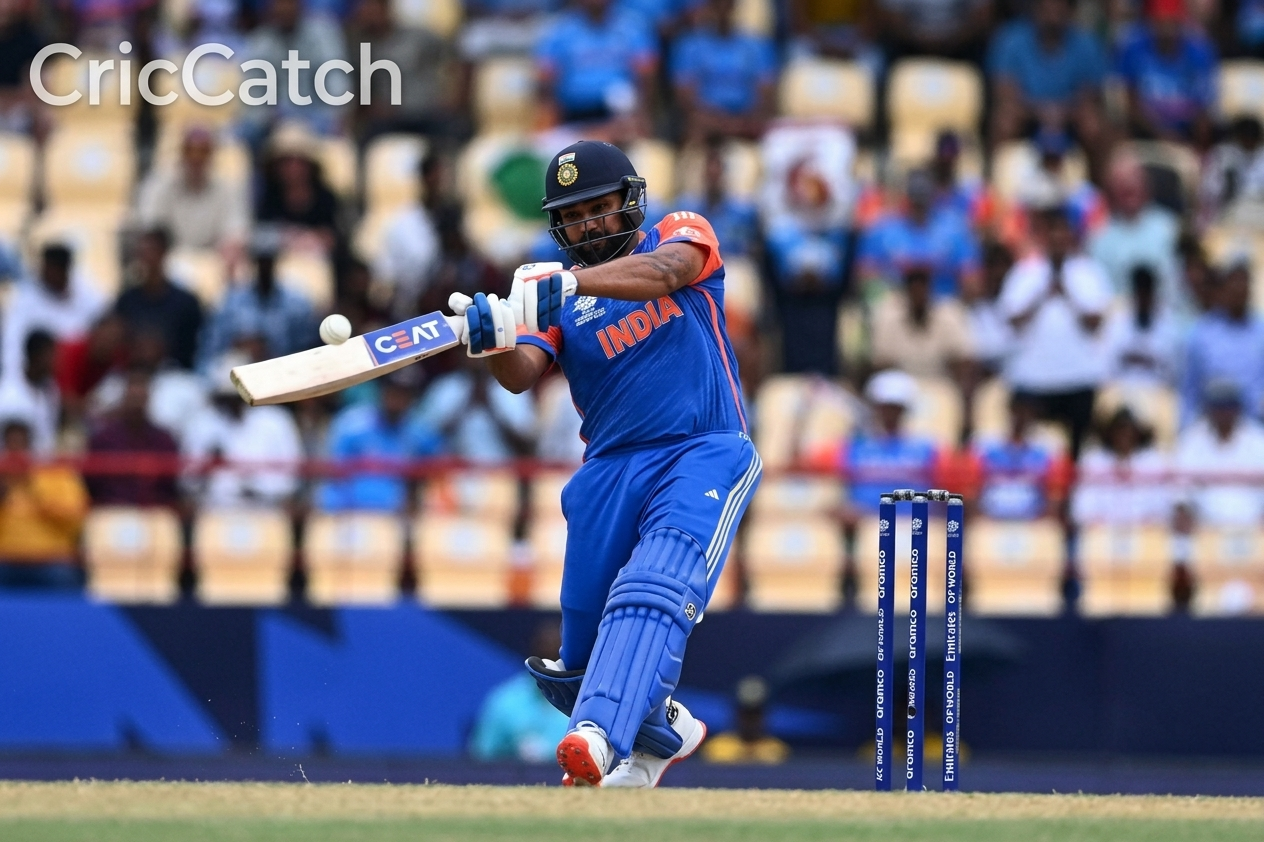
India Current ODI and T20 Batting Strength: Line-Up & Key Batters
India currently have one of the deepest batting groups in white-ball cricket. But the strength of the team is not only about having famous names. Their real advantage is the number of different batting roles they can cover.
The ODI side has experience, long-innings ability and proven match-winners such as Shubman Gill, Rohit Sharma, Virat Kohli and KL Rahul. The T20I group is built more around power, speed and flexible batting options, with players such as Abhishek Sharma, Ishan Kishan, Shreyas Iyer, Tilak Varma, Sanju Samson and Vaibhav Sooryavanshi.
The latest results also show why India's batting deserves a closer look. In the 2026 ODI series against West Indies, India chased 406 in the second ODI, with Gill scoring an unbeaten double century and Rohit Sharma making 101. In the third ODI, India recovered from 4/2 to make 351/7 through KL Rahul unbeaten 129 and Rohit Sharma's 92.
At the same time, West Indies chased that 351 in the final ODI, showing that a huge Indian batting total does not automatically make the team unbeatable. That balance is important when judging India's current batting strength.
India Current Batting Strength in ODI and T20 Cricket
India batting strength looks different in the two formats. ODI cricket gives their experienced top order more time to build an innings, while T20 cricket gives their younger power hitters more opportunities to attack from the first ball.
| Area | ODI Cricket | T20 Cricket |
|---|---|---|
| Main batting identity | Control and long innings | Power and fast scoring |
| Top-order strength | Gill, Rohit, Kohli | Abhishek, Ishan and flexible options |
| Middle-order support | KL Rahul and all-round options | Tilak, Shreyas, Samson, Dube |
| Finishing depth | Rahul and all-rounders | Multiple power-hitting options |
| Experience | Extremely strong | Mix of experience and youth |
| Biggest advantage | Big-score building | Fast acceleration |
| Main question | Top-order dependence | Role and combination flexibility |
The important point is that India do not depend on one type of batter. They can use an experienced player to control an innings, an aggressive batter to change the scoring rate, and a middle-order player to finish the game.
That makes the batting unit difficult to plan against. A bowling attack can prepare for one player, but it becomes much harder when India have several players capable of changing the match in different ways.
India ODI Batting Line-Up: Openers, Middle Order and Finishers
India's updated ODI squad for the West Indies series included Shubman Gill, Rohit Sharma, Virat Kohli, Ruturaj Gaikwad, KL Rahul, Dhruv Jurel, Nitish Kumar Reddy, Ravindra Jadeja, Yashasvi Jaiswal and Naman Dhir among the batting options.
That gives India a useful mixture of established international batters, younger players and all-round batting depth.
A likely ODI structure starts with an experienced opening combination, followed by Gill or another top-order option, with Kohli providing control and Rahul offering flexibility in the middle order. The exact XI can change according to opposition, conditions and team management plans, so the squad should not be confused with a confirmed playing XI.
The biggest benefit is depth. If the openers play a long innings, India can build towards a very high total. If early wickets fall, Rahul, Jadeja and the other batting options can still rebuild the innings before accelerating later.
India ODI Top Order: Gill, Rohit and Kohli’s Batting Power
The top order remains the strongest part of India's ODI batting because it combines current form, experience and different batting styles.
Shubman Gill is now the ODI captain and remains one of India's central batting figures. His 223* against West Indies in the second ODI was a major example of his ability to turn a strong start into a massive individual score. He also scored a century in the first ODI.
Virat Kohli provides a different type of value. He does not need to attack every ball to control an ODI innings. His ability to build an innings, handle pressure and accelerate when required makes him particularly valuable in chases. In the first ODI against West Indies, Kohli scored 139 from 88 balls and moved beyond 15,000 ODI runs. The performance also pushed him close to Gill at the top of the ICC ODI batting rankings.
Rohit Sharma adds another layer. His role is not simply to survive the powerplay. He can put pressure on the new-ball attack before an opposition captain has time to settle into defensive plans. His 101 in the second ODI against West Indies, followed by 92 in the third match, showed that he can still produce major contributions at the top.
This gives India a very useful top-order balance: Gill can control and dominate, Rohit can attack early, and Kohli can manage pressure and build the innings.
KL Rahul and India’s ODI Middle-Order Batting Depth
KL Rahul is one of the most important players when discussing India's batting depth because he gives the team more than one solution.
He can provide stability when early wickets fall, increase the scoring rate once the platform is ready, and also contribute as a wicketkeeper-batter. His unbeaten 129 from 87 balls in the third ODI against West Indies was a perfect example of this flexible role. India were reduced to 4/2, but Rahul helped rebuild the innings and then attacked strongly enough to take India to 351/7.
This is exactly the type of batting depth users often want to understand when they ask whether India have a “strong batting line-up.” The answer cannot be based only on the first three names.
If Gill, Rohit or Kohli fail, India still have players capable of producing a major innings. That reduces the risk of the entire batting order collapsing after one bad powerplay.
India T20 Batting Line-Up: Power, Intent and Flexible Roles
The T20I batting group has a different identity. India's current squad includes captain Shreyas Iyer, Abhishek Sharma, Vaibhav Sooryavanshi, Ishan Kishan, Sanju Samson, Tilak Varma, Shivam Dube, Nitish Kumar Reddy and Naman Dhir.
This group is built around attacking options rather than one fixed batting formula.
India can start with an aggressive opener, use left-hand and right-hand combinations, send a strong hitter up the order when the matchup is favourable, and keep another power hitter for the final overs.
The key T20 question is therefore not simply “Who is India's best batter?” It is:
How many players can India use to change a T20 match within 20 or 30 balls?
That is where the current Indian batting group becomes particularly dangerous.
Abhishek Sharma and India’s Explosive T20 Opening Attack
Abhishek Sharma is one of the clearest examples of India's modern T20 batting approach.
His value comes from intent. He can attack during the powerplay instead of waiting for the innings to develop. That changes the pressure on the opposition immediately because the bowling captain has fewer safe options when boundaries arrive early.
His recent performances support that reputation. In the Asian Games final against Pakistan, Abhishek scored 61 from 28 balls as India reached 211/6, the highest total of the men's cricket competition.
This type of player gives India a major advantage in T20 cricket. If Abhishek gets through the first few overs, the opposition may have to change bowling plans much earlier than expected.
His left-hand batting also adds variety to India's combinations and can create different matchups against pace and spin.
Ishan Kishan, Samson and Shreyas Iyer Add T20 Options
India's T20 batting strength becomes clearer when the discussion moves beyond the opening pair.
Ishan Kishan gives India an aggressive wicketkeeper-batter option. He can attack in the powerplay but can also play a longer innings when required. In India's Asian Games semifinal against Sri Lanka, Kishan made an unbeaten 80 and helped India reach 169/7.
Sanju Samson provides another wicketkeeper-batting option and gives the team flexibility when selecting its XI. Having two established wicketkeeper-batters means India are not forced into one single combination.
Shreyas Iyer is also important because he brings leadership and middle-order control. His role can become especially valuable when the top order attacks early and the middle order has to manage the transition between the powerplay and final overs.
This variety means India's T20 batting selection can change according to pitch, opposition bowling and match situation.
Tilak Varma and India’s Middle-Order T20 Batting Strength
Tilak Varma is particularly valuable because he can enter an innings when the situation is uncertain and still finish with a high scoring rate.
That makes him different from a batter whose only role is to attack from ball one. A strong T20 middle-order player must understand when to rotate strike, when to attack spin, when to target pace and when to take the risk required in the final overs.
His Asian Games final performance against Pakistan showed exactly why he is considered an important part of India's T20 batting future. Tilak scored an unbeaten 51 from only 22 balls, adding the late acceleration that helped India reach 211/6.
For India, this is extremely useful. A top order can build the platform, but players such as Tilak can turn a good 150–160 total into a 190–210 type score.
Vaibhav Sooryavanshi and India’s New T20 Batting Depth
Vaibhav Sooryavanshi represents another important part of India's current T20 strategy: giving young high-impact batters exposure at international level.
His selection is not simply about his age. India see value in players who have already shown the ability to score quickly and handle high-pressure cricket.
At the same time, it is important not to put unrealistic expectations on a young player. International cricket is different from domestic or franchise cricket, and consistency takes time.
For India, his biggest value right now is the possibility of adding another attacking option to an already deep T20 batting group. His inclusion also shows that India's selection strategy is looking beyond the current generation.
India’s Batting Attack: How Deep Can the Line-Up Go?
Batting depth is one of the strongest reasons India can build competitive totals even after losing early wickets.
| Batting Layer | India's Main Advantage |
|---|---|
| Opening | Experience in ODI, power in T20 |
| No. 3–4 | World-class control and acceleration |
| Middle order | Multiple role-based options |
| Lower middle order | All-round batting support |
| Finish | Several players can increase scoring rate |
| Backup | Strong pool of domestic and international options |
In ODI cricket, India depth comes from players such as Rahul, Jadeja, Reddy and other squad options supporting the main top order.
In T20 cricket, the depth is more aggressive. Tilak Varma, Samson, Ishan Kishan, Shivam Dube, Nitish Kumar Reddy and Naman Dhir give India several ways to change the batting order.
That is important because T20 cricket is often decided by matchups. India do not necessarily need one fixed batting order for every opponent.
India ODI vs T20 Batting: Which Format Is Stronger Right Now?
The answer depends on what “stronger” means.
If strength means experience, proven big scores and the ability to control a 50-over innings, India's ODI batting has an outstanding advantage.
If strength means power, flexibility, fast scoring and the number of players who can change a match quickly, the T20 batting group may have the more exciting profile.
| Factor | ODI | T20 |
|---|---|---|
| Experience | Excellent | Very good |
| Powerplay attack | Strong | Excellent |
| Long innings | Excellent | Less important |
| Middle-order flexibility | Strong | Excellent |
| Finishing power | Strong | Excellent |
| Youth and new options | Strong | Very strong |
| Proven big-match experience | Excellent | Strong and growing |
The ODI group currently has the stronger combination of experience and proven high-level consistency. The T20 group, however, may have greater attacking variety.
India’s Key Batters Who Can Change a Match Quickly
| Batter | Format | Main Role | Match-Changing Quality |
|---|---|---|---|
| Shubman Gill | ODI | Top order | Big scores and control |
| Rohit Sharma | ODI | Opener | Powerplay dominance |
| Virat Kohli | ODI | Top order | Pressure batting and chases |
| KL Rahul | ODI | Middle order | Recovery and acceleration |
| Abhishek Sharma | T20 | Opener | Explosive powerplay batting |
| Ishan Kishan | T20 | Opener/WK | Aggressive scoring |
| Shreyas Iyer | T20 | Top/middle order | Control and acceleration |
| Tilak Varma | T20 | Middle order | Pressure hitting |
| Sanju Samson | T20 | Top/middle order | Boundary power |
| Vaibhav Sooryavanshi | T20 | Young attacking option | High-impact potential |
The most important point is that these players do not all perform the same job. That is exactly what makes the group strong.
Gill and Kohli can control an ODI innings. Rohit can destroy the powerplay. Rahul can rescue an innings and finish strongly. Abhishek can change a T20 match in the first six overs. Tilak can attack in the middle and late overs.
That is a much more useful way to understand India's batting than simply ranking the players from one to ten.
What Makes India Current Batting Attack So Difficult to Stop?
The first major strength is role diversity.
India have batters who can attack immediately and batters who can build an innings. That means the opposition cannot rely on one bowling plan.
The second strength is recovery ability. India recent third ODI against West Indies is a good example. Gill and Kohli were dismissed cheaply, but Rahul's unbeaten 129 and Rohit's 92 helped India recover from 4/2 and reach 351/7.
The third strength is late acceleration. India do not need to score at the same rate throughout an innings. They can build a platform and then use aggressive batters to increase the run rate.
The fourth is left-right variety and flexible selection. Different combinations allow India to respond to the opposition rather than using exactly the same batting order every time.
Finally, India have a strong pipeline of younger batters. That reduces the risk of the batting unit becoming dependent only on one generation of players.
Where India’s Current Batting Still Has Questions
A professional assessment should also look at the risks.
The first question is top-order dependency. India have exceptional top-order players, but losing several of them early can still force the middle order into a recovery role instead of allowing it to attack freely.
The second question is T20 role clarity. India have many talented batters, but having many options can also create selection problems. The team must decide who opens, who controls the middle overs, who finishes and who is used according to specific matchups.
The third question is international consistency for younger players. A player can have outstanding domestic or franchise numbers and still need time to become consistent in international cricket.
The fourth question is balance between batting depth and bowling resources. Adding another batter can increase scoring potential, but India also need enough bowling options to defend the total.
The latest ODI series showed why this balance matters. India scored 351/7 in the third match, yet West Indies chased the target with five wickets remaining. Shai Hope's unbeaten 162 powered a record West Indies chase, proving that even a huge Indian batting total can be challenged when conditions favour batting.
India's own captain Shubman Gill also said after the series that the team still has areas to improve before the 2027 ODI World Cup, particularly around overall team execution.
India’s Current Batting Strength Ahead of the 2027 ODI World Cup
India's ODI batting is in a strong position heading towards the 2027 World Cup.
Gill is now leading the side, Rohit and Kohli continue to provide enormous experience, Rahul offers middle-order flexibility, and younger players such as Ruturaj Gaikwad, Yashasvi Jaiswal, Nitish Kumar Reddy and others provide competition for places.
The recent West Indies series was especially useful because India showed both sides of their batting. They chased 406 in the second ODI, with Gill making 223* and Rohit 101, but they also recovered from 4/2 in the third ODI to make 351/7.
That combination of top-order quality and recovery ability gives India a strong base. The remaining challenge is to identify the best final combination for different World Cup conditions.
Final Verdict on India’s Current ODI and T20 Batting
India's current batting strength is best understood as depth, variety and match-winning ability rather than simply a list of famous names.
In ODI cricket, the biggest strength is the combination of Gill's current leadership and run-making, Rohit's power, Kohli's experience and Rahul's middle-order flexibility. The recent West Indies series provided strong evidence of that depth, including a 406-run chase and a 351/7 recovery after an early collapse.
In T20 cricket, India's biggest weapon is attack from multiple positions. Abhishek Sharma can damage the powerplay, Ishan Kishan and Samson give wicketkeeper-batting flexibility, Shreyas Iyer adds control, Tilak Varma provides middle-order acceleration, and younger options such as Vaibhav Sooryavanshi increase the team's attacking ceiling.
So, who is India's key batter? There is no single answer.
For ODI cricket, Gill, Rohit, Kohli and Rahul all have different match-winning roles.
For T20 cricket, Abhishek Sharma and Tilak Varma are among the clearest current examples of India's aggressive new batting identity, while Ishan Kishan, Samson, Iyer and other options make the line-up deeper.
That is India biggest batting advantage right now: if one batter fails, another type of batter can take over the game.
**