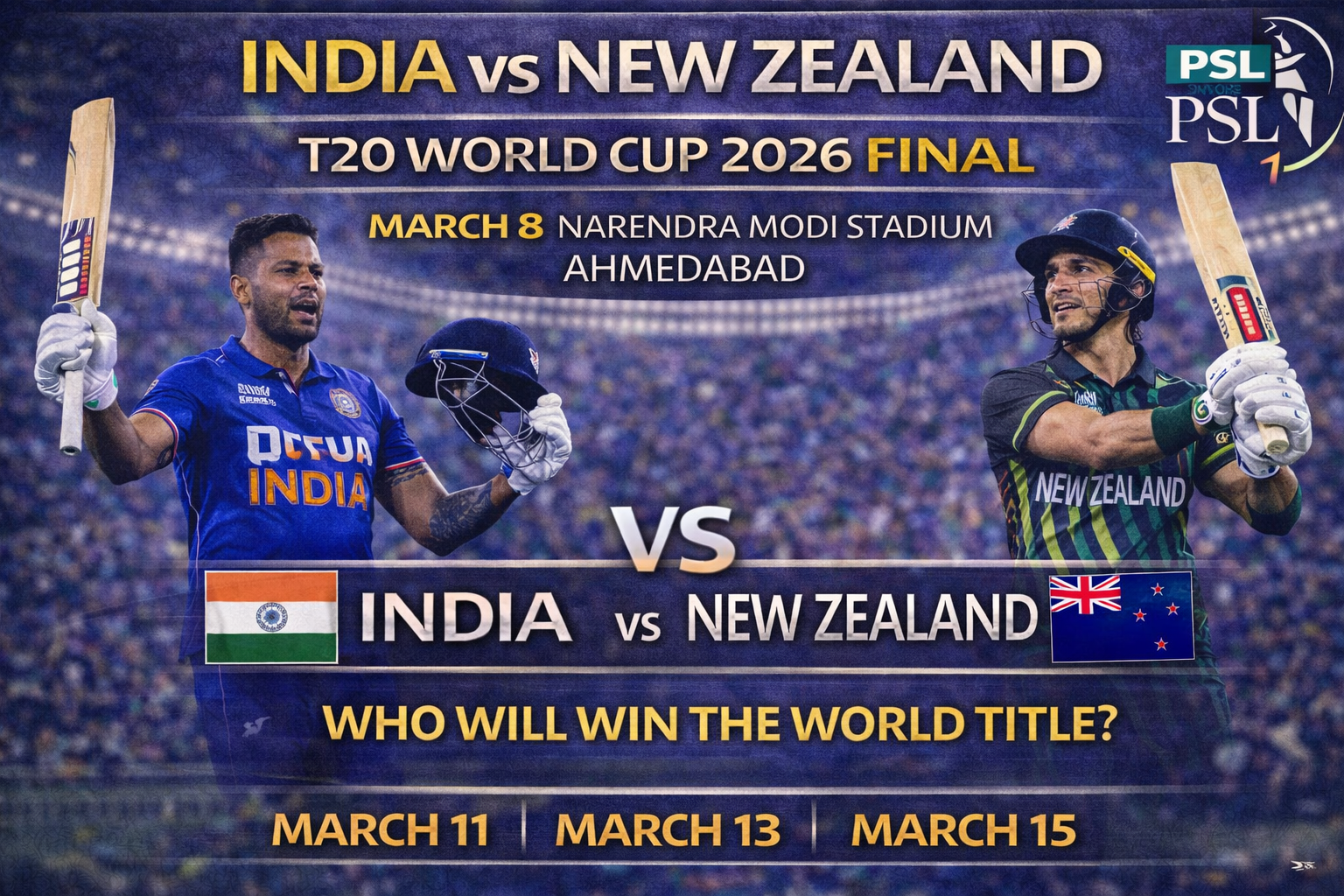
The Narendra Modi Stadium in Ahmedabad is set to host the ultimate showdown of the T20 World Cup 2026 as India and New Zealand face off in the grand final on March 8. Both teams have taken very different paths to reach this stage, creating a fascinating narrative of redemption and strategic growth. While India has dominated the format for the last two years, New Zealand has used recent defeats to build a blueprint for success, setting the stage for a high-stakes battle for the world title.
The New Zealand camp, led by Mitchell Santner, is entering the final with a unique sense of confidence despite a heavy 4-1 series loss to India just a month ago. During that bilateral series in India, the Black Caps were often overwhelmed, but Santner insisted that the experience provided "great learnings." Those lessons have clearly paid off during this World Cup, as the team has looked far more clinical in their execution, particularly in their dominant semi-final win over South Africa.
A major factor in New Zealand’s success has been the record-breaking opening duo of Finn Allen and Tim Seifert. The pair has already amassed 463 runs together in this tournament, the highest ever for an opening partnership in a single T20 World Cup. Finn Allen, fresh off his historic 33-ball century, has transformed the way the Black Caps approach the Powerplay. His ability to put world-class bowlers under immediate pressure will be the biggest threat to the Indian bowling attack.
On the other side, India enters the final with a couple of individual stories searching for a perfect ending. Abhishek Sharma, the world’s No. 1 ranked T20 batter, has had a relatively quiet tournament by his lofty standards. After battling a stomach infection just before the World Cup, the young opener has struggled to find the same muscle and power that made him so destructive in 2025. However, the Indian management remains confident that his "big match temperament" will shine through in the final.
Similarly, mystery spinner Varun Chakaravarthy is looking for his own moment of redemption. Currently ranked as the No. 1 bowler in T20Is, Varun has found this World Cup challenging, especially after conceding 64 runs in the semi-final against England. Despite his recent struggles, captain Suryakumar Yadav has publicly backed his premier spinner, reminding critics that Varun is a "world-class match-winner" who knows how to handle the pressure of a final.
The selection strategies for both teams will be crucial on the Ahmedabad pitch. New Zealand has shown great flexibility, opting for Cole McConchie over more experienced options to provide a different spin dimension. Meanwhile, India’s balance of five bowlers and six batters has been tested throughout the tournament. The battle between India’s spin twins and the New Zealand batters, who have been the second-best side against spin in this cycle, could decide the outcome of the match.
The Narendra Modi Stadium is expected to be a sell-out, with over 100,000 fans cheering for the home side. However, the "underdog" tag is something New Zealand has always worn comfortably. Mitchell Santner noted that a World Cup final is "a little bit different" to a bilateral series, suggesting that the pressure of the occasion might level the playing field. For India, the pressure is about maintaining their status as the global leaders of the format and securing back-to-back titles.
Weather conditions in Ahmedabad are expected to be clear, though dew could become a significant factor in the second innings. This makes the toss extremely important, as both captains would likely prefer to bowl first to avoid a wet ball later in the evening. The ground's large boundaries will also challenge the power-hitters, rewarding those who can find gaps and run well between the wickets.
As the cricket world holds its breath, the final represents a collision of two distinct philosophies. India relies on individual brilliance and a sustained high tempo, while New Zealand relies on meticulous planning and collective execution. By the end of Sunday night, either India will cement its era of dominance, or New Zealand will finally "encash" their learnings to lift their first-ever T20 World Cup trophy.