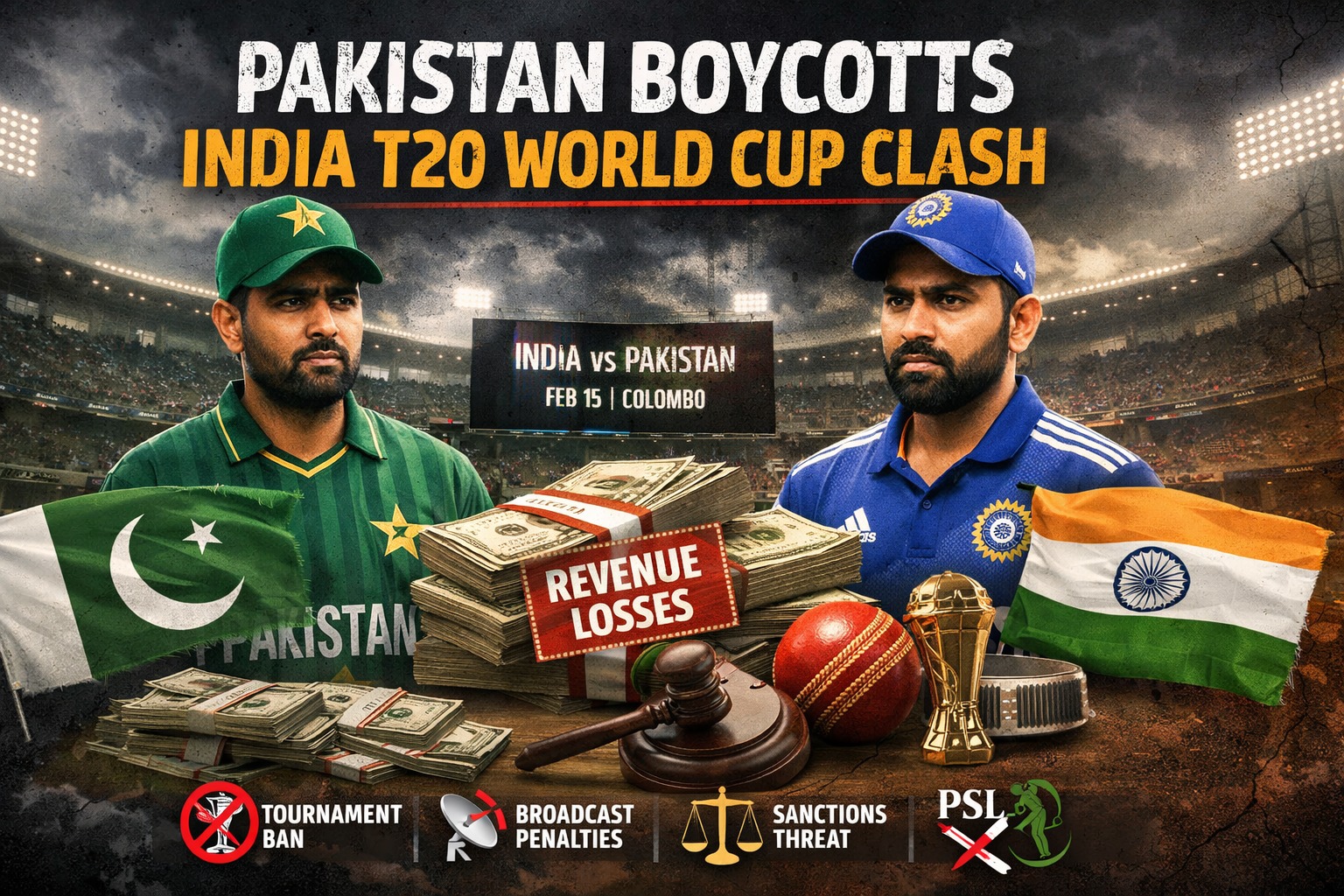
Pakistan's choice not to play India in the group stage of the ICC Men's T20 World Cup 2026 has sent shockwaves through the cricketing world. There are serious worries about lost money, broadcasting obligations, and possible disciplinary action from the International Cricket Council.
Many people think that the highly anticipated India–Pakistan match on February 15 in Colombo is the most valuable in world cricket. According to estimates from the industry, the ICC and its broadcast partners could lose thousands of crores right away if this one match is cancelled. Both national boards are also expected to lose money directly and indirectly related to matches, with estimates putting the loss at about Rs 200 crore each.
India's cricket board can handle a loss like this because it has a lot of money, but Pakistan's situation is much more fragile. The Pakistan Cricket Board gets a lot of money from the ICC, about six per cent of the ICC's annual earnings. This source of income is very important to the PCB's finances and is closely linked to regular participation and meeting tournament obligations.
The type of withdrawal makes things even more difficult. ICC rules say that if a member board chooses not to play in a scheduled match without meeting the requirements for force majeure, they could face penalties. It goes against the basic ideas behind ICC events for some countries to only take part in some global tournaments. These events are based on all participating countries being equally committed.
After the announcement, the ICC said that it had received the statement from the Pakistan government and was waiting for a formal message from the PCB. Officials have said, though, that refusing to play a certain match while still being in the tournament is a big problem.
Under ICC rules, possible punishments could include fines, not paying broadcasters their share of the revenue, or even disciplinary action that would keep them from participating in future events. There are also worries that Pakistan's long-term failure to comply could hurt its standing in the international cricket community, which could affect its relationships with other countries and the way leagues run.
Reports say that the Pakistan government has let the national team play in the rest of the tournament, which starts on February 7. However, stakeholders are worried about the team's absence from the big match against India. The ICC, sponsors, and broadcasters had all planned big business around the game, so losing it was especially bad.
The ICC is still waiting for official word from the PCB, so things are still up in the air. However, the decision has effects that go far beyond one match. These effects could affect Pakistan cricket's future on the world stage in terms of money, the law, and diplomacy.